 English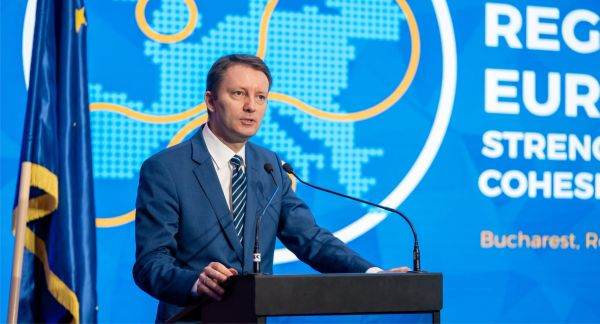
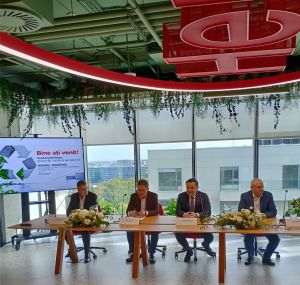
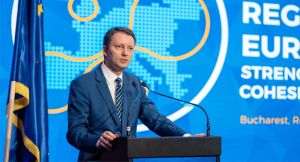
Allocations exceeding euro65 billion for Romania, increased funding for farmers and regional development, and a clash with states seeking to cut the future European budget-these are the stakes of the negotiations for the 2028-2034 period. These points were outlined on Friday in Bucharest by MEP Siegfried Mureşan during a conference on the future of cohesion policy, organized by the EPP Budget Working Group of the European Parliament.
In a Europe under pressure to invest simultaneously in defense, competitiveness, infrastructure, and agriculture, conference participants argued that cohesion policy must defend its place within the multiannual European budget framework. Meanwhile, the solution proposed by EPP Group Vice-Chair Siegfried Mureşan to fund greater ambitions targets sectors with significant financial clout: tech giants, online gambling, and profits from cryptocurrency transactions.
At stake are the allocation of funds, the influence of local authorities over investments, and the Union's capacity to finance new priorities without sacrificing regional development. For Romania-which has been allocated over euro30 billion through cohesion policy for the 2021-2027 financial period, according to data provided by the organizers-the outcome of these negotiations will be crucial for the next generation of public projects.
Siegfried Mureşan noted that more than euro53 billion of the non-repayable funds Romania has received since 2007 came from cohesion policy.
"Without this money, Romania would not be where it is today. Without European funds, Romania will not be able to develop sufficiently in the coming years," Mureşan wrote.
However, the figures for the future budget highlight stakes that are still under negotiation. "Working alongside colleagues from the European Committee of the Regions, we succeeded in establishing the European Parliament's position on the future EU budget at a level 10% higher than the draft budget originally proposed by the European Commission. The European Commission proposed euro2,000 billion, whereas the European Parliament's position-which I managed to secure as chief negotiator-stands at euro2,200 billion," stated Siegfried Mureşan. The difference compared to the Commission's proposal would be even more pronounced regarding traditional Union policies, according to the figures he announced. "Compared to the European Commission's initial proposal, the European Parliament's position represents a 47% increase in funds for farmers and a 35% increase in funds for cohesion policy-meaning a new, modern cohesion policy that allows us to invest in line with new priorities. I hope that those representing Romania in the Council-the future government and the European Council-will succeed in defending what we, the regional representatives and those of us in the European Parliament, have managed to secure together," said Siegfried Mureşan.
• Dual-use projects: a priority in cohesion policy for the 2028-2034 multiannual budget
The conference held in Bucharest on Friday highlighted the shift in priorities for cohesion funding. Siegfried Mureşan linked regional development to European security and economic competitiveness, citing the example of infrastructure that can serve the general public and businesses while also facilitating military mobility. For a country neighboring the war in Ukraine, this argument adds a new dimension to transport projects: infrastructure can also become a component of defense capabilities. "We have two major European Union priorities: security and defense, and competitiveness. Cohesion policy can help us become stronger in these areas. Today in Bucharest, we are discussing how to finance dual-use-civilian and military-projects, such as military mobility, through the new cohesion policy. We discussed how the motorway sections connecting to Ukraine and the Republic of Moldova-which Romania has chosen to fund via the European SAFE defense program-serve as prime examples in this regard," stated EPP Vice-President Siegfried Mureşan.
The reference to SAFE was used to illustrate the dual utility of infrastructure within the context of discussions on future cohesion investments. Mr. Mureşan announced his intention to allocating larger shares of these funds to projects that contribute to citizens' safety, alongside a stricter requirement regarding the economic impact of investments. His message to beneficiaries was clear: European funding must address genuine needs.
"Furthermore, all cohesion funds we absorb in the coming years must directly contribute to boosting our economy's competitiveness. We will not build schools where there are no children, nor will we build facilities for which there is no known need," said Siegfried Mureşan. He further explained that public investments must create conditions to attract private capital: "The entire European Union budget accounts for just over 1% of the member states' GDP. We cannot solve every problem using only the EU budget; instead, we must spend European funds in a way that generates further private investment from the funds invested. If we improve infrastructure and guarantee security for both people and investors, private investment will follow."
• Sari Rautio: "Cohesion policy is not charity"
For Sari Rautio, Chair of the EPP Group in the European Committee of the Regions, the case for cohesion policy rests on the benefits that a country's development brings to the European market as a whole. When asked by the newspaper • BURSA• to clarify her remarks-specifically why she twice stated during the conference that "cohesion policy should not be viewed as charity"-Sari Rautio cited the example of Romania and the perspective of member states concerned with limiting joint expenditure. "I come from a country belonging to the so-called "frugal' group (Editor's note: Sari Rautio is a Finnish citizen). You know that in these states, cohesion policy is often described as a handout. Such a claim is mistaken. As we see from the example of Romania-which is an excellent case study-when cohesion funds are used wisely, the country's economy grows, and everyone benefits. The link between the Single Market and cohesion policy is inescapable. Whether for a "frugal' nation or one with greater financial resources, it is in everyone's interest for the Single Market to thrive. Therefore, cohesion policy is not charity, nor is it merely about solidarity; it is an investment policy, and we all need to understand this," stated Sari Rautio.
This argument carries significant weight in budget negotiations: funds allocated to less developed regions can be justified by the economic benefits of a stronger common market. Viewed in this light, Romania's development contributes to expanding business opportunities and ensuring the effective functioning of the European economy. Sari Rautio warned of the consequences of weakening the very instrument through which citizens see tangible results of EU membership: "In Romania, we see a success story of cohesion policy. It makes no sense to break something that works. Of course, we need to modernize cohesion policy-a topic discussed here as well as in Brussels and across Europe in recent weeks. If we lose cohesion policy-the policy closest to citizens-we play into the hands of populist voices in Europe. When we see what Europe can offer people, it is thanks to this policy; I believe it is crucial to understand this now, as we aim to build a safer, more competitive, and better Europe for us all in the future."
• New EU-level taxes
However, advocating for a larger budget for the 2028-2034 period runs up against a fundamental question: who will fund it? When asked about calls for budget cuts from powerful member states-such as Germany, France, Denmark, Sweden, and Finland-Siegfried Mureşan rejected this approach, arguing that the new responsibilities assumed by the Union require additional resources. In his view, reducing EU funding would simply shift costs onto national budgets without eliminating the problems that need to be addressed. "I believe that the states calling for a reduction in the European Union budget are mistaken. Our challenges are multiplying. People expect more from the European Union, including in the areas of security and defense. And for the European Union to deliver more, a larger budget is required. Cutting the budget would be a mistake, as the challenges we face would not disappear; they would have to be addressed at the national level, and I am convinced that resolving them nationally would be more difficult," said the EPP Vice-President.
Siegfried Mureşan acknowledged that budget increases cannot cover every area and must be justified, but he argued for the need to protect cohesion policy and the Common Agricultural Policy, alongside significant increases for security, defense and competitiveness. Noting that significantly higher national contributions are difficult to secure from states required to reduce their deficits, the MEP pointed to the Union's new own resources as the solution for funding the budget.
His most emphatic remarks concerned major technology companies. "A revenue source based on taxing tech and digital giants. These are among the largest companies in the world. They have free access to 450 million European citizens and must contribute for the access they enjoy to the European Single Market. It would be wrong for us to be unable to fund research, security, or agriculture simply so that individuals like Elon Musk, Mark Zuckerberg, or Jeff Bezos-the planet's wealthiest people-can continue to have free access to the European Single Market," stated Siegfried Mureşan.
In addition to this proposal, he pointed to the taxation of online betting and gambling, as well as a revenue source based on profits generated from cryptocurrency transactions.
Sari Rautio, Chair of the EPP Group in the European Committee of the Regions, also expressed support for the new own resources, linking certain forms of taxation to the reduction of behaviors with negative social impacts. "I believe it is extremely important to understand that this is precisely why we, in the Committee of the Regions, strongly support all these new own resources. We want to see reduced tobacco consumption, so it makes sense to tax what you wish to curtail. Another area would be gambling-given that it is a massive issue, this is certainly a possibility. Also, as Mr. Mureşan mentioned, cryptocurrency transactions. Therefore, possibilities exist; we need common European funding because we need a stronger Europe," stated Sari Rautio.
• Siegfried Mureşan: "Rural development means infrastructure and urban-style living conditions in rural areas"
For Romania, the volume of future allocations must be matched by the communities' capacity to turn them into investments. When asked about supporting smaller local authorities-given that large cities provide visible examples of successful fund absorption-Siegfried Mureşan advocated for directing resources toward less developed regions and adopting a broader approach to rural development. Villages should benefit from services and opportunities that help narrow the gap between them and urban areas. "Rural development should no longer mean merely agricultural work in villages; instead, it must primarily entail rural access to education and healthcare comparable to that in cities; secondly, transport and digital infrastructure in villages matching urban standards; and thirdly, jobs in industry and new sectors within rural areas. The more actively mayors and local and regional authorities are involved, the faster the absorption of funds and the more relevant the projects," said Siegfried Mureşan.
The negotiation timeline remains crucial for project preparation. According to the EPP Vice-President, the European Parliament has already established its position and negotiation mandate as of April, and the goal is for member state leaders to reach a position by the end of this year.
"We are now waiting for the European Council-the heads of state and government-to adopt a negotiation mandate by the end of this year at the latest. This would allow for final negotiations between the European Parliament and the Council to conclude early next year, ensuring everything is ready for funds to be absorbed without delay starting January 1, 2028," stated Siegfried Mureşan.
Concluding negotiations quickly would give authorities, companies, and beneficiary organizations time to prepare for accessing the funds. Delays would compress this timeframe, particularly at a time when discussions are underway regarding both the available amounts and the alignment of investments with new priorities. For administrations planning infrastructure projects, for farmers, and for companies seeking European funding, budget predictability has practical effects even before the first payment is made.















 Euro
Euro Dolar SUA
 Franc elveţian
 Liră sterlină
 Gram de aur



























Reader's Opinion